
Active Warrants are legal documents that signal an immediate need for law‑enforcement action, and anyone facing a potential arrest can quickly verify their status with an active warrant search. By entering a subject name, case number, or warrant number into a public warrant database, users can retrieve warrant records that show the issuing court, warrant type, issue date, and current status—whether the warrant remains outstanding, has been recalled, or is marked as resolved. This warrant lookup by name or case number helps individuals answer common questions such as how to check for an active warrant, how to know if a warrant is still active, and why an active warrant may not appear online. Because warrant information is updated regularly by the issuing authority, a timely warrant status check can prevent surprise arrests and guide the next steps, whether that means contacting the appropriate court, seeking legal assistance, or clearing the warrant through required court appearances.
Active Warrants can be found in a warrant database that aggregates outstanding warrants, arrest warrants, bench warrants, and failure‑to‑appear notices from multiple jurisdictions. The search process typically requires basic details—subject name, case number, or reference number—to pull up warrant records that include offense information, warrant conditions, and any recent updates to the warrant status. Users often wonder how to find an active warrant by name or how to search a warrant by case number, and a well‑designed warrant search portal offers filters for warrant type, issuing authority, and jurisdiction. Understanding the distinction between an active warrant and a recalled or quashed warrant empowers people to act appropriately, whether that means resolving the underlying legal issue, confirming the warrant’s validity, or learning why a warrant might be sealed or restricted from public view.
How to Search Active Warrants
Searching for active warrants in Sacramento County begins with the public records portal maintained by the Sacramento County Sheriff’s Office, where you can look up warrant records by name, case number, or warrant number. The warrant lookup system shows records issued by local courts, the Sheriff’s Department, including bench warrants, and allied law enforcement agencies that operate inside Sacramento County. Before running a search, gather the subject’s full legal name, date of birth, and any known reference numbers so you can narrow results faster and avoid confusion with people who share similar names. A careful search returns data tied to each warrant, such as offense details, bond amount, and the court that issued the order.
Official Search Portal: https://www.sacsheriff.com/pages/records_warrants_faqs.php
Steps to Search
- Open the Sacramento County Sheriff’s Office Records and Warrants page through the portal listed above.
- Choose the search method that fits your need: by name, by case number, or by warrant number.
- Enter the subject’s full legal name along with date of birth or approximate age to refine the lookup.
- Submit the search request and review the list of warrants shown for that individual.
- Open each warrant record to read the warrant type, offense description, bond terms, and court of issue.
- Note the warrant number, issue date, and last update so you can verify the status with the court clerk if needed.
- Contact the Sheriff’s Office Records Bureau at (916) 874-5383 if the online search returns no records or shows partial data.
Warrant Search by Name
A name-based search works well when you know the full legal name of the subject but lack case or warrant numbers. Type the last name first, then the first name, and add any middle name or initial if you have it. The system searches across booking records, court-issued warrants, and outstanding criminal warrants on file in Sacramento County. Filters for date of birth and approximate age help separate common names from one another. When several entries appear, compare each result against the details you have to confirm the right match before taking action.
Warrant Search by Case or Reference Number
If you hold a court case number or warrant reference number, a direct search delivers one record rather than a list of similar names. Case numbers appear on court summons, police reports, and prior correspondence from the Sacramento County District Attorney’s Office. Reference numbers also appear on warrant recall notices, release paperwork, and traffic ticket court reminders. Entering either number pulls up the warrant record tied to the specific court filing, which removes the need to filter by name. This route fits attorneys, defendants, and family members tracking a single case over time.
Information Needed for a Warrant Search
Having the right data on hand keeps your search short and your results accurate. The Sacramento County Sheriff’s Office uses a combination of identifiers to match the right person across thousands of records stored in the warrant database. Assemble the following details before you begin:
- Full legal name, including any aliases or previous surnames
- Date of birth or approximate age range
- Last known address within Sacramento County
- Case number, warrant number, or reference number when available
- Issuing court name, when known, such as Sacramento Superior Court
- Date of the underlying incident or arrest, if relevant
Active Warrant Records
Each active warrant record in the Sacramento County system carries core identifiers that confirm its legitimacy and scope. Reviewing these details helps you tell a fresh warrant from an old entry or a clerical mix-up. The Sheriff’s Office keeps warrant data aligned with court records so the public sees current orders on warrants issued for failure to appear, criminal offenses, and probation violations.
Warrant Number and Issue Date
The warrant number acts as a unique identifier stamped on every order signed by a Sacramento County judge or magistrate. Issue dates confirm when the court authorized law enforcement to act, which matters because some statutes of limitations depend on that timestamp. A warrant issued years ago may still be active if no action cleared it, so the issue date alone does not signal urgency. Cross-check the warrant number with court paperwork to confirm the entry belongs to your search subject.
Person Named on the Warrant
The subject section lists the full legal name and known aliases of the person the court intends to apprehend or bring before the bench. Sacramento County records often add date of birth, height, weight, and physical descriptors to help deputies confirm identity in the field. If you find a name that could belong to someone else, request a record comparison through the Sheriff’s Records Bureau before making assumptions. Misidentification is a leading reason for warrant disputes handled at the clerk’s window.
Warrant Type
Warrant type tells you why the court issued the order and what kind of law enforcement response is allowed. Sacramento County warrants fall into categories that mirror California statutes and local court rules. Common categories include arrest warrants for new criminal charges, bench warrants for missed court dates, and search warrants that authorize property searches. Reading the type clarifies whether the warrant involves custody or a different legal action such as an evidence seizure.
Issuing Court or Authority
The issuing court data points to the judge, magistrate, or agency that signed the warrant, which lets you know which clerk’s office to contact about status updates. Most Sacramento County warrants come from Sacramento Superior Court, though some originate from courts in cities such as Citrus Heights, Elk Grove, Folsom, Rancho Cordova, or Galt. Federal warrants issued by U.S. District Court for the Eastern District of California appear in separate databases. Matching the issuing authority helps you avoid calls to the wrong clerk’s office when verifying a record.
Warrant Status
Warrant status reflects where the warrant sits in the legal process at the moment of your search. A status of active or outstanding means the order stands ready for service, while recalled, quashed, or withdrawn means a judge canceled the action. Status fields update as courts receive service reports, recall orders, or resolution notices from the District Attorney’s Office. Always note the update date next to the status so you can judge how fresh the data really is.
Warrant Search Results
Search results list each warrant that matches your filter along with summary cards you can open for the full record. The portal sorts results by default from newest to oldest and groups cases under the same subject name together. Reading each result carefully protects you from overlooking active orders hidden behind closed or resolved cases.
Identifying the Correct Record
When a name search returns several hits, scan middle names, dates of birth, and addresses to find the right person. Even small details, such as a middle initial or different spelling, can shift which record lines up with your subject. Sacramento County records sometimes list the same person under prior surnames from a name change or marriage. Click each card to view the full record before assuming a match is correct.
Matching Names and Identifying Details
Warrant databases record full names plus aliases, so a single individual may appear under older spellings or nicknames. Comparing physical descriptors, last known addresses, and booking photos when available, is the most reliable way to confirm identity. If your subject has a common name, narrow the search by adding date of birth or a specific case number. A confirmed match leads to accurate next steps; an uncertain match calls for contact with the Records Bureau.
Reviewing Warrant Status
Status labels on each result card tell you whether the warrant is still in force, recalled by a judge, or marked served. Reading the status field alongside the last update date prevents confusion about old versus current orders. A warrant tagged active last month may have changed status since, so treat the listed update date as a freshness stamp. When the status reads recalled, quashed, or canceled, no arrest is pending under that warrant.
Checking Issue and Update Dates
Every warrant record lists the issue date on the warrant itself and the update date when the database last changed the entry. Long gaps between those two dates can mean the warrant is old or that no recent action has touched the case. Short gaps suggest active court involvement or recent service attempts. Sacramento County courts issue most warrant updates within days of a clerk order, but a backlog or sealed case may push back the online refresh.
Confirming Record Information
Once you locate a matching record, double-check the offense description, bond amount, and court of issue before relying on the data. Errors occasionally slip into online records, especially when case data migrates from older systems. Calling the issuing court clerk or Sheriff’s Records Bureau provides written confirmation when stakes are high. A verified record gives you the confidence to plan your next move, whether that means turning yourself in, posting bond, or seeking legal counsel.
Types of Active Warrants
Sacramento County courts issue different warrant types based on the charge, the stage of the case, and whether the defendant appeared as required. Each type carries its own service rules, including jail records, statute of limitations, and bond conditions. Learning the differences helps you understand what enforcement action is tied to the warrant on file.
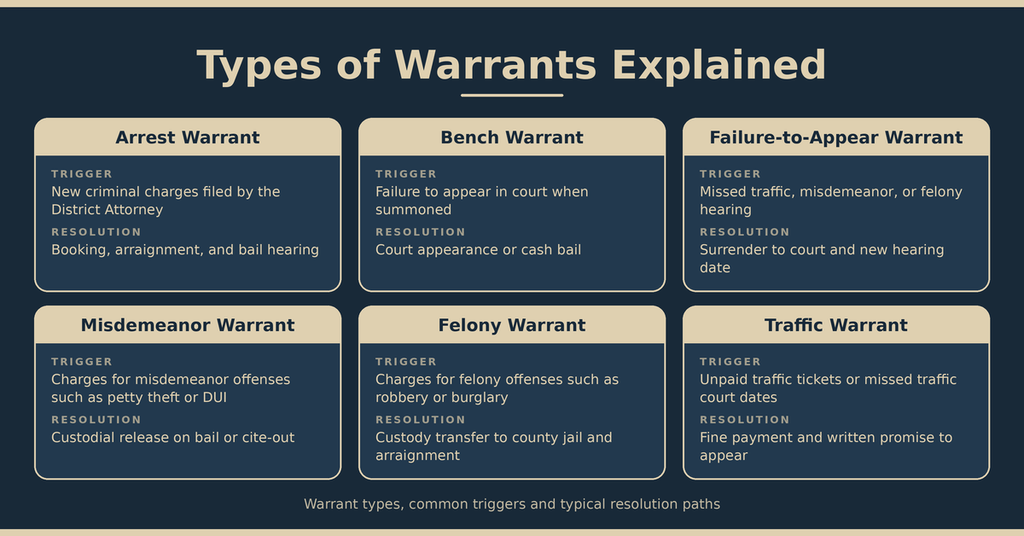
Arrest Warrants
An arrest warrant authorizes Sacramento County deputies and allied police agencies to take a named person into custody for a specific criminal offense. A judge signs the warrant after the District Attorney files a complaint supported by probable cause. Once signed, the warrant enters the county system and stays active until the subject is arrested, the case is recalled, or the charge is dismissed. Bond conditions on an arrest warrant set the dollar amount needed to secure release before arraignment.
Bench Warrants
A bench warrant comes directly from the judge’s bench when a defendant, witness, or juror fails to appear as ordered. Sacramento County judges issue these for missed hearings, probation violations, or contempt findings. Unlike arrest warrants tied to new charges, a bench warrant seeks the appearance of a person already tied to an ongoing case. Clearing a bench warrant usually requires a court appearance plus resolution of the underlying issue that triggered the original court order.
Failure-to-Appear Warrants
Failure-to-appear (FTA) warrants are a specific category of bench warrant triggered by missing a scheduled court date. California traffic statutes add civil penalties for missed traffic court dates, which can multiply the cost of the original ticket. Court clerks in Sacramento County treat FTAs as urgent because they delay case resolution and waste judicial resources. Resolving an FTA begins with contacting the court clerk to schedule a new date and address any added fines.
Misdemeanor Warrants
Misdemeanor warrants cover charges that carry up to one year in county jail, such as simple assault, petty theft, driving under the influence, or trespassing. Sacramento County deputies can serve these warrants anywhere in the state and coordinate with other counties on interstate cases. Bond schedules for misdemeanors often allow cite-out release rather than long detention, but repeat offenses raise bond amounts. Always check the bond schedule tied to your specific warrant before paying.
Felony Warrants
Felony warrants apply to charges punishable by state prison terms, such as robbery, sexual assault, or major drug sales. Sacramento County treats felony warrants as high priority and assigns them to specialized detective units for service. A felony arrest usually requires a court appearance before a judge within 48 hours of booking. Bond amounts run higher than misdemeanor cases, and release decisions depend on factors like prior record and flight risk.
Other Warrant Types
Other warrant types issued in Sacramento County cover a range of legal situations beyond criminal arrests. Each type follows its own procedure and shows up in different records systems. Familiar examples include:
- Search warrants for property, vehicle, or digital device searches
- Body attachment warrants from family court for custody disputes
- Out-of-state fugitive warrants under the Uniform Criminal Extradition Act
- Civil contempt warrants tied to child support or small claims judgments
- Probation violation holds issued by the Probation Department
Warrant Status and Case Records
Warrant status fields in the Sacramento County database give you a snapshot of where the case sits in the court pipeline. Status updates happen when clerks receive signed orders from a judge or when service reports come back from the field. A clear grasp of status terminology saves you from mistaking an old record for a fresh threat.
Active and Outstanding Warrants
Active and outstanding describe the same condition: the warrant stands ready for service by law enforcement. Sacramento County deputies check active warrants during traffic stops, probation checks, and new arrests to spot open cases. Court systems update active status when clerks enter signed orders, so the database reflects current orders in real time. If you see active or outstanding, treat the warrant as an immediate concern and act quickly.
Recalled Warrants
A recalled warrant has been pulled back by the issuing court but stays in the database for historical purposes. Recall orders follow new evidence, witness retraction, or plea deals that resolve the underlying case. Sacramento County judges recall warrants more often than they quash them, especially for low-level misdemeanor cases. A recall does not erase the original arrest record, but it removes any immediate arrest authority tied to that warrant number.
Quashed or Withdrawn Warrants
Quashed and withdrawn mean the judge voided the warrant before service. Quashing happens when legal defects exist, such as lack of probable cause or mistakes in the subject’s identity. Withdrawal follows prosecutor motions to drop the underlying case. Either way, the warrant no longer supports an arrest, and the subject can move on without facing immediate custody from that specific order.
Warrant-Linked Case Records
Each warrant sits inside a larger court file that includes charging documents, motions, and minute orders. Sacramento County online portals show only top-level case data, so you may need to visit the clerk’s office at 720 9th Street for full documents. Case data such as next hearing date, attorney of record, and bond decisions helps you prepare for the next step. Linking a warrant to its case file turns a single data point into a full picture of the legal situation.
Warrant Status Updates
Status updates ride on clerk orders, service reports, and judge-signed minute entries that flow into the database. Sacramento County courts push updates in batches, often at the end of each business day, so an entry may be hours behind reality. Routine cases see fresh statuses within one business day, while complex cases with sealed filings take longer. Treat the printed update date as a useful guide rather than a guarantee of full accuracy on every record.
What to Do About an Active Warrant
Finding your name on an active warrant feels urgent, but the right response starts with calm, clear action. Take time to verify the record, gather paperwork, and contact the appropriate court or attorney before surrendering or posting bond. Most Sacramento County warrants can be resolved without prolonged jail time if handled properly through the right channels.
Confirming Warrant Details
Begin by writing down the warrant number, issue date, charges, and bond amount as shown in the online record. Compare that data against any paperwork you have from the court or police, such as a citation or release form. Errors do occur, and a confirmed typo can save you from an unnecessary arrest. Use the phone number listed at the bottom of the Sacramento County Sheriff’s Office portal to confirm details with records staff.
Contacting the Appropriate Court or Authority
Once you confirm the warrant, call the issuing court clerk to ask about resolution options and available court dates. The Sacramento Superior Court Clerk’s Office at 720 9th Street handles criminal cases during regular business hours. For warrants tied to city ordinances, contact the city attorney’s office in Citrus Heights, Elk Grove, Folsom, Rancho Cordova, or Galt. Each clerk can tell you whether the warrant allows cite-out release or requires a court appearance.
Resolving a Failure-to-Appear Warrant
An FTA warrant tied to traffic tickets or low-level misdemeanors often clears up with a written promise to appear and payment of added fines. Request a new hearing date from the clerk, pay the failure-to-appear penalty, and sign a written promise before the new court date. Some courts accept a phone-in resolution for traffic-only FTAs. Sacramento County traffic courts allow mailed payments when fines are the only issue on the table.
Legal Assistance and Court Procedures
Hiring a Sacramento criminal defense attorney speeds up resolution and protects your rights during the surrender or arraignment. Attorneys file motions to recall warrants, schedule new court dates, including jail roster, and negotiate bond reductions on your behalf. Many local attorneys offer free consultations for warrant cases and accept payment plans. Public defender services cover people who meet income guidelines, with offices located near the main courthouse in downtown Sacramento.
Warrant Records That Are Unavailable
Not every warrant shows up in online search results, and that gap is normal rather than a sign of bad data. Sacramento County courts withhold certain categories of warrants for investigative or legal reasons. Knowing why a record is missing helps you avoid chasing dead ends and protects people named in those records from unintended exposure.
Recently Issued Warrants
Newly signed warrants can take hours to reach the public database because clerks must enter the data after the judge signs the order. Sacramento County courts push most entries by the end of business day, but a Friday afternoon warrant may not appear until Monday morning. Waiting a few hours and refreshing the search often pulls up the missing record without further action on your part.
Sealed or Restricted Records
Judges seal warrant records in cases involving juveniles, undercover investigations, informants, or witness safety concerns. Sealed records remain hidden from the public portal even if they are very active. California courts use statutory provisions tied to juvenile confidentiality and informant identity protection as the basis for sealing. You won’t see sealed records in a name search; only the court clerk or assigned attorney can review them. Common sealed scenarios include:
- Cases involving juveniles or minor children
- Active undercover investigations with sensitive tactics
- Informant or witness safety concerns
- Sexual assault cases that require victim confidentiality
Incorrect or Incomplete Search Details
A search may return nothing because of a typo or missing middle name. Try variations of the subject’s name, remove dates of birth, or switch from name to case number when you have it. Online searches don’t always handle special characters or hyphens cleanly, so plain letter versions of names work best. A second pass with broader details often reveals records the first pass missed entirely.
Delays in Warrant Status Updates
Status changes take time to flow from the court to the public portal, especially when the clerk’s office is handling a backlog. A warrant served last week may still show as active until the next day. Court holidays and staff shortages add to the delay. When a search shows an old status, follow up directly with the issuing court to confirm the current standing of any case.
Contact Details
Reach the Sacramento County Sheriff’s Office Records and Warrants Bureau during business hours to verify warrant data, request certified records, or schedule an in-person review. Walk-in service is available at the headquarters address on Orange Grove Avenue in Sacramento. Phone lines open at 8:00 AM Monday through Friday and close at 4:00 PM on days the county is open. The Bureau closes on county holidays, so calling ahead during holiday weeks saves a wasted trip.
- Address: 4510 Orange Grove Avenue, Sacramento, CA 95841
- Contact Number: (916) 874-5383
- Office Hours: Monday through Friday, 8:00 AM to 4:00 PM, excluding holidays
Frequently Asked Questions
This list answers common questions about finding active warrants in Sacramento County, including how to search, what details you will see, and why some warrants may not appear online.
How can I search active warrants in Sacramento?
Visit the Sacramento County Sheriff’s public records portal at the official website. Choose the active warrant search option and enter the subject’s full legal name, case number, or warrant number. The system returns records issued by local courts and law‑enforcement agencies. You can also call the records office at (916) 874‑5383 during business hours for assistance. Results show the warrant’s status, issue date, and issuing authority, helping you confirm whether a warrant is currently active.
Can I look up a warrant by name online?
Yes. The online portal allows a warrant lookup by name. Type the exact first and last name as it appears on legal documents. The search returns any active or outstanding warrants linked to that name, along with case numbers and charge descriptions. If multiple entries appear, review each to verify the correct individual. For privacy reasons, some records may be restricted, and you may need to contact the sheriff’s office for clarification.
What information is shown in a warrant record?
A warrant record lists the warrant number, issue date, and current status (active, recalled, or resolved). It also includes the issuing court or authority, the jurisdiction, the subject’s name, and the case number. Offense details such as the alleged crime, charge classification, and any conditions are displayed. Updates to the warrant, like a change in status or a clearance date, appear in the record’s history, giving a complete view of the legal action.
Why might a warrant not appear online?
Some warrants are excluded from the public database because they are sealed, under investigation, or issued by agencies that do not share data electronically. Recent warrants may also be pending entry, as updates occur after a processing delay. If you suspect a warrant exists but cannot find it, contact the sheriff’s records division directly. They can confirm the warrant’s existence and explain any restrictions on public access.
How often does Sacramento update warrant data?
The sheriff’s office updates the warrant database nightly, adding new issuances and reflecting status changes from the courts. However, occasional delays can occur if a court or law‑enforcement agency submits information after the daily cut‑off time. For the most current information, run a fresh search each day or call the records office during business hours to verify a specific warrant’s status.